
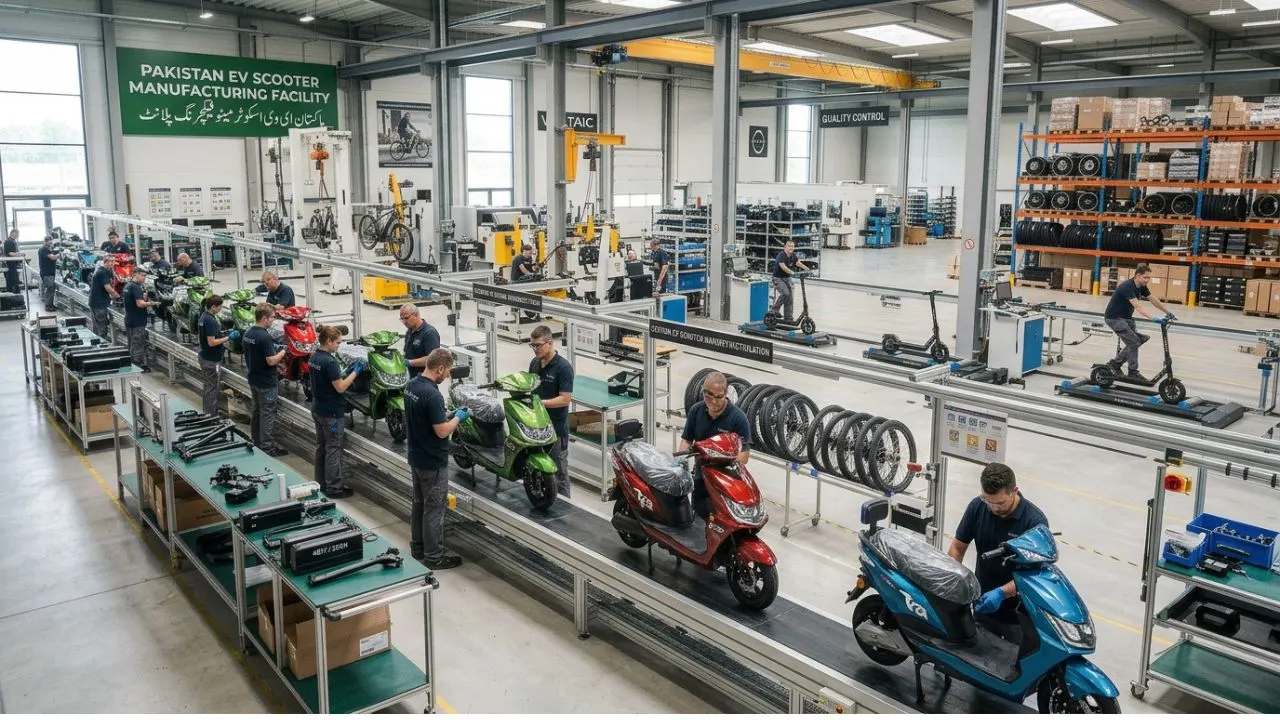
A new China–Pakistan joint venture will produce electric motorcycles, batteries and charging equipment in Punjab, as the province steps up efforts to move riders off petrol.
Pakistan’s motorcycle market, one of the busiest in the region and still almost entirely powered by petrol, could get another push toward electrification. A Chinese company and a local electric vehicle maker have agreed to build manufacturing capacity in Punjab that covers the whole EV chain, from the bike itself to the battery that powers it and the charger that refuels it.
Who Is Involved
China’s G-Force Group has signed a joint venture agreement with a Pakistani EV company to manufacture and sell electric vehicle products in the province. Zhang Rui, Director of G-Force Group China, signed for the Chinese side. Dr. Muhammad Amjad, Chairman of the local firm, signed for the Pakistani partner. The ceremony took place at PISC House on Davis Road, Lahore, with Punjab’s Minister for Industries and Commerce, Chaudhry Shafay Hussain, as chief guest.
Two Plants, Split Responsibilities
The partners have divided the work:
- Electric motorcycles: The Pakistani company will build an e-bike assembly plant at Quaid-e-Azam Business Park in Sheikhupura, an industrial zone near Lahore.
- Batteries and charging stations: G-Force Group will set up its own facility in Punjab to make EV batteries and charging equipment.
This split may matter more than the bike plant itself. Batteries are the most expensive part of an electric two-wheeler, and too few places to charge is one of the main reasons buyers hesitate. Making both locally could, over time, help bring down costs and make it easier to own an e-bike.
The Government’s Pitch
Minister Hussain said the provincial government, under the Chief Minister’s direction, is making the EV sector a priority. He said Punjab already has several factories producing electric two-wheelers, with more local and international manufacturers setting up operations.
He predicted that electric motorcycles would steadily take over from petrol models in the coming years, which would cut both noise and air pollution in Punjab’s crowded cities. He also invited Chinese investors to use the province’s special economic zones, especially to manufacture EV charging stations.
The minister said the venture would bring fresh capital and new jobs to Punjab. He added that it reflects how Chinese companies are becoming more involved in Pakistan’s economy, which strengthens business ties between the two countries.
What to Watch
The agreement does not yet include public details on investment size, production capacity, or when the plants will start operating. These figures will decide how much the project actually matters. For riders, the real tests will be price, battery warranty, and whether charging points spread beyond major cities. If the venture delivers on all three, it could become an important step in Punjab’s shift away from petrol bikes.